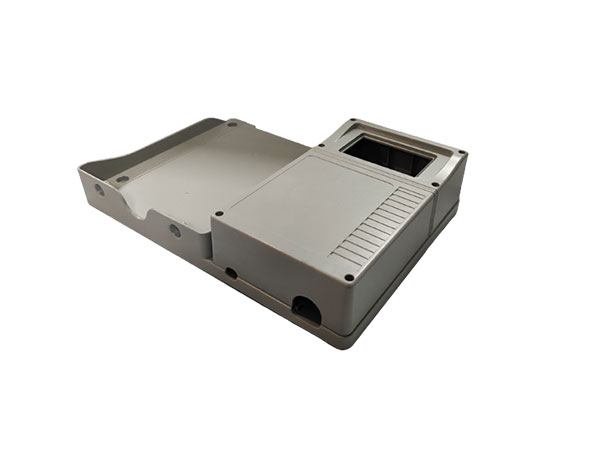
This case is particularly significant for us.
It's not because the technology is so difficult, but because - we have never done the assembly of finished products before, and there are also electronic components involved.
The customer is aware of this.
But they still chose Yisen.
1. The "unreasonable" request from the client: Make the finished product along with the components.
The client is from Russia and mainly deals in professional audio equipment such as microphones and microphone clips. Their products are not complex, but they have very high requirements for assembly accuracy and reliability - after all, in stage performances and recording studios, equipment malfunctions can lead to accidents.
Initially, the client only intended to have us produce molds and injection parts. However, during the sample-making stage, they made a request that made us hesitate:
"Could you please assemble the finished product for us directly? There are electronic components inside, but it's not very complicated."
To be honest, we were hesitant.
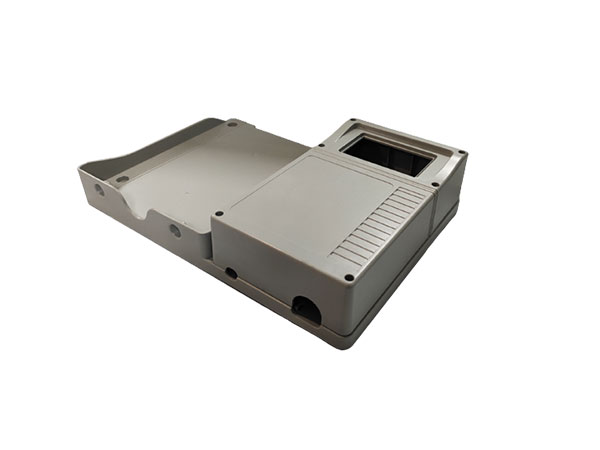
Yisen specializes in precision molds, injection molding, oil spraying, and semi-finished product assembly. We have experience in finished product assembly, but we have never done finished products with electronic components - no mass production has been carried out. What the customer wants is not just a casing, but a complete product with a circuit board installed, wires soldered, and tested to pass.
The sales colleague asked for my opinion. I said, "Technically it can be done, but we have no experience. Should we take it on or not?"
Finally, we connected.
Because the client said this: "I believe you can make the molds well, and then you will also be able to master the assembly process."
II. The difficulties were more numerous than expected.
The assembly of the finished product may seem simple at first, but upon closer inspection, it turns out to be full of details.
The first challenge: We have no experience in assembling electronic components.
What we previously assembled was a semi-finished product - simply putting the injection-molded parts together, tightening screws and using clips, without involving the electronic components.
But now we have to face:
The circuit board inside the microphone is fixed (any positional deviation of 1mm will cause poor contact);
Welding point inspection (open welds will cause no sound);
Final product power-on test (we need to build our own test fixture ourselves).
We spent two weeks setting up a dedicated assembly line, training 6 workers, and working with the technicians to write the first version of the SOP (Standard Operating Procedure). The test fixtures were welded by the engineers themselves. At first, the measurements were inaccurate and they had to make 4 revisions before they were stable.
The second difficulty: The client is located in Russia and cannot be present for on-site confirmation.
All assembly standards can only be aligned through video conferences and sample deliveries.
The first batch of 20 sets were sent to Russia. The customers' feedback after receiving them was that two of the microphones were not working.
After disassembly, we found that it was due to an insecure connection of the wire ends, which became loose during transportation.
So we improved the welding process and added a second stage of glue application for fixation. Since then, this problem has not occurred again in any subsequent batches.
III. Unexpected Challenges: Customs Clearance Qualifications
After we finally managed to produce the product and stabilize its quality, we encountered a non-technical problem:
We do not have the qualification for customs declaration of electronic products exports.
Our previous export products were mainly molds, injection parts and semi-finished products, which were classified as "plastic products" or "molds".
But this time it's a finished microphone with electronic components. The customs code is different, and it requires corresponding qualifications and declaration experience.
If we have to handle the customs declaration ourselves, it's because we don't have enough time and there's no way to control the risks.
Solution: Division of labor, not taking on everything alone
We had an open and honest discussion with the client about this matter.
The client understood this well and proposed a division of labor plan:
Yisen is responsible for: mold design, injection molding, oil spraying, final assembly, quality inspection, and packaging of qualified products.
The customer's logistics partner is responsible for: picking up goods in Dongguan, conducting export customs declaration, international transportation, and customs clearance for import in Russia.
That is to say: We only handle what we are good at. Customs clearance and logistics are entrusted to partners that our clients trust.
This plan went very smoothly. The client's logistics partners in Russia have complete qualifications and experience in importing and exporting electronic products. All processes were compliant and efficient. We just needed to pack the products as agreed, and cooperate with the inspection and handover.
IV. Results: For the first time, we managed to produce the finished product.
Currently, the microphone and microphone clip products for this Russian customer have been delivered in three batches, with a total of over 5,000 sets.
Assembly pass rate: Stabilized at over 97%
Customer complaint: 0 (after the third batch)
Our capability limit: Has been formally expanded to "assembly of finished products with electronic components"
The customer later sent a message, and we have been keeping the screenshot.
“You said you hadn‘t done it before. But you did it like you had done it a hundred times.”
(You say you haven't done it, but you did it as if you had done it a hundred times.)
V. Final Thoughts: If it doesn't work, then learn from it; if it's not feasible, don't persist in it.
The biggest inspiration this case brought to Yisen was two sentences:
No, it can be learned.
Having no experience in final product assembly, we had to build the production line, write the SOP, and weld and test the fixtures ourselves. The technical gaps were filled with attitude and time.
No, don't push through.
If you don't have the qualification for electronic product customs declaration, just tell the customer to leave it to the professionals. What the customer wants is "the product to be well-made", not "everything to be handled for them".
Now, Yisen has officially acquired the capability to assemble finished products with electronic components. If you also have similar requirements - from mold design to injection molding to assembly, even if this is your first time seeking a Chinese supplier, please feel free to get in touch.
Dongguan Yisen Precision Mold Co., Ltd.
Precision molds · Injection molding · Oil spraying · Finished product assembly
(Real Case · No Blowing of Hype · Only Solving Problems)

 中文版
中文版 Japanese