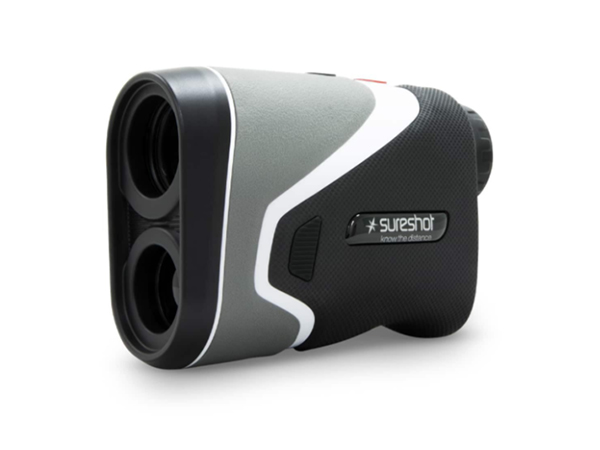
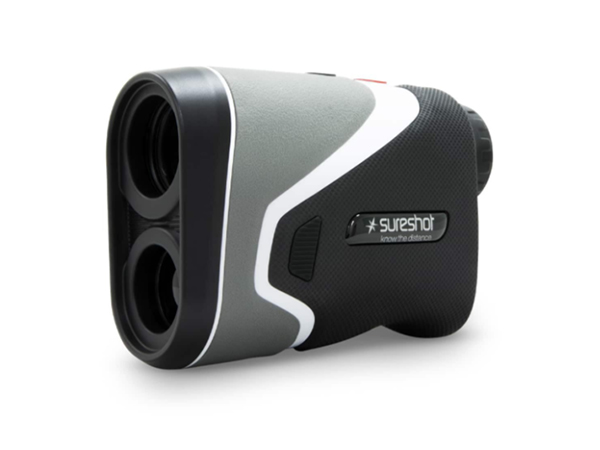
This was a contest about "standards". The customer's requirement was "zero defects" - not 99%, not 99.9%, but every golf measuring instrument delivered to the user should be as clean, precise and flawless as an optical instrument.
But we didn't manage to do it in the beginning.
1. Poor Start: Lessons Learned from Returns
At the beginning of last year, we received this order from Jinhua. The client is a leading domestic brand in the field of golf measuring devices. Their products are sold worldwide, including in Europe and America. They have extremely strict requirements for quality.
After the first batch of trial production, the return rate remained high. The problems reported by customers fell into two categories:
Appearance defects: There are minor shrinkage, bonding lines and slight scratches on the surface of the casing.
Poor fuel injection: dust spots, particles, localized scorching, insufficient adhesion.
Our yield rate was once only 50%.
The customer told us very straightforwardly: "If you don't improve your performance, we will change our supplier."
The pressure is real, but complaining won't solve the problem. We chose - to break down the problem.
II. Root Cause Analysis: The problem lies in the "old molds" and the "manual lines"
We placed the returned defective products one by one under a magnifying glass for analysis, and sent a team to the customer's site in Jinhua twice to re-examine the entire production process from the beginning.
Two fundamental reasons have emerged:
The mold structure has inherent flaws.
The molds that the customer was originally using were not the ones we initially designed. Instead, they adopted an old scheme from another supplier. This set of molds has several major flaws:
The injection system is not reasonable, which leads to an unbalanced flow of the molten material during the injection process, resulting in flow marks and shrinkage on the surface of the shell.
Uneven cooling causes local overheating, resulting in slight deformation and affecting the adhesion of subsequent fuel injection.
The exhaust design is inadequate, and the trapped air causes tiny bubbles that expand into surface defects after the fuel injection.
In simple terms: Using this set of molds, no matter how you adjust the machine, you will never be able to produce a "zero-defect" measuring instrument casing.
2. Manual fuel injection line, quality "depends on luck"
The distance measuring instrument has similar requirements for appearance to an optical lens cover - any speck of dust or a single imperfection will be immediately noticed by the end user.
At that time, we used a manual oil injection line. The operators' techniques, the cleanliness of the environment, the stability of the paint atomization... there were too many variables. Even if the molds were made properly, the oil injection process would still result in more than 30% of dust defects.
The customer demands zero defects, but we are still relying on "luck" to produce - this approach won't work.
III. Decisive Reengineering: New Mold + Automatic Injection Line
We didn't make any minor adjustments to the original plan; instead, we made a straightforward decision:
Start over.
Step 1: Reopen the mold and solve the problem from the structural perspective.
Yisen's mold team redesigned the entire mold for the range meter housing:
Re-plan the sequence of the multi-point valve hot runner system to ensure balanced melt filling, and eliminate flow marks and bonding lines.
Optimize the conformal cooling water channels to ensure a more uniform temperature distribution in the mold, and control the product deformation within 0.05mm.
Introduce a high-precision exhaust structure to completely eliminate the tiny bubbles caused by trapped air.
After this new mold was put into use, the overall quality rate of the injection molded parts directly rose to over 98%. Without any post-processing, the exterior of the shells has achieved near-zero defects.
Step 2: Move to the automatic fuel injection line and remove "people" from the critical process.
We have simultaneously invested in the construction of a fully automated robot fuel injection line, which includes:
A 100,000-square-meter dust-free oil injection workshop;
Automatic electrostatic dust removal + robot spraying + constant temperature leveling + UV curing.
Core Changes:
The fuel injection thickness is controlled by the program and no longer depends on the feel.
The source of the dust particles has been reduced from "operators" to "a very small number of environmental particles".
The oil spraying effect of each range finder's casing remains consistent.
IV. Results: The defect rate increased from 50% to 95%, and the remaining issues were merely dust particles.
After the new molds and the automatic oil injection lines were put into use, we continuously tracked the production data of three batches of products, totaling over 6,000 sets.
Overall pass rate: Stays above 95%
Improper structural changes:
The original problems such as shrinkage, scratches, bonding lines and adhesion have been basically eliminated.
Among the remaining defective products, over 90% are merely minor dust spots (even the automated line cannot completely eliminate them, but it is already much better than the industry standard).
After the third inspection, the customer simply sent a single sentence: "This is exactly the quality we wanted."
More importantly, the delivery delays caused by previous returns have been completely resolved. Our single-shift production capacity has increased from the original 800 units to 2,200 units, and the delivery cycle has been shortened by nearly half.
V. Final Thoughts: Strength is not something that can be expressed verbally; it is something that can be achieved through efforts.
For Eisan, this case is not about getting back an order; rather, it is about enabling us to have a clearer understanding of:
When customers demand "zero defects", it's not because the customers are being too demanding; rather, it's because our production process is not yet perfected.
We did poorly before, and that is a fact. But instead of explaining or blaming others, we chose to:
Open up each returned item and identify the real cause.
Overturn the old mold, even if it means incurring additional costs;
Introduce the automated production line, using equipment capabilities to replace human fluctuations.
Now, the mold and injection process for this golf measuring instrument have become one of the standard configurations for Yisen in the field of precision components. Thanks to this "turnaround", we have also received mold orders for measuring instruments from two other companies in the same industry.
If you are also struggling with the issue of "zero appearance flaws", then come and take a look at Dongguan Yisen - we don't promise miracles, but we are good at solving problems.
Dongguan Yisen Precision Mold Co., Ltd.
Specialized in precision molds and high-quality injection molding / spraying one-stop solutions

 中文版
中文版 Japanese